
India Carp Market Outlook
The market is expanding as freshwater carp, an affordable, nutritious, and widely available protein, moves from a regional staple to a nationwide dietary choice. Rising health awareness, urbanization, and the growth of nuclear families are increasing demand for low-fat, high-protein foods that are easy to source and quick to cook.
Supportive government policies for aquaculture infrastructure, favorable climate and water resources, advances in fish breeding, and private investment in cold chains and organized retail are strengthening supply. The carp market in India is therefore evolving from traditional open markets toward cleaner, packaged, and more efficiently distributed products.
Market-At-A-Glance
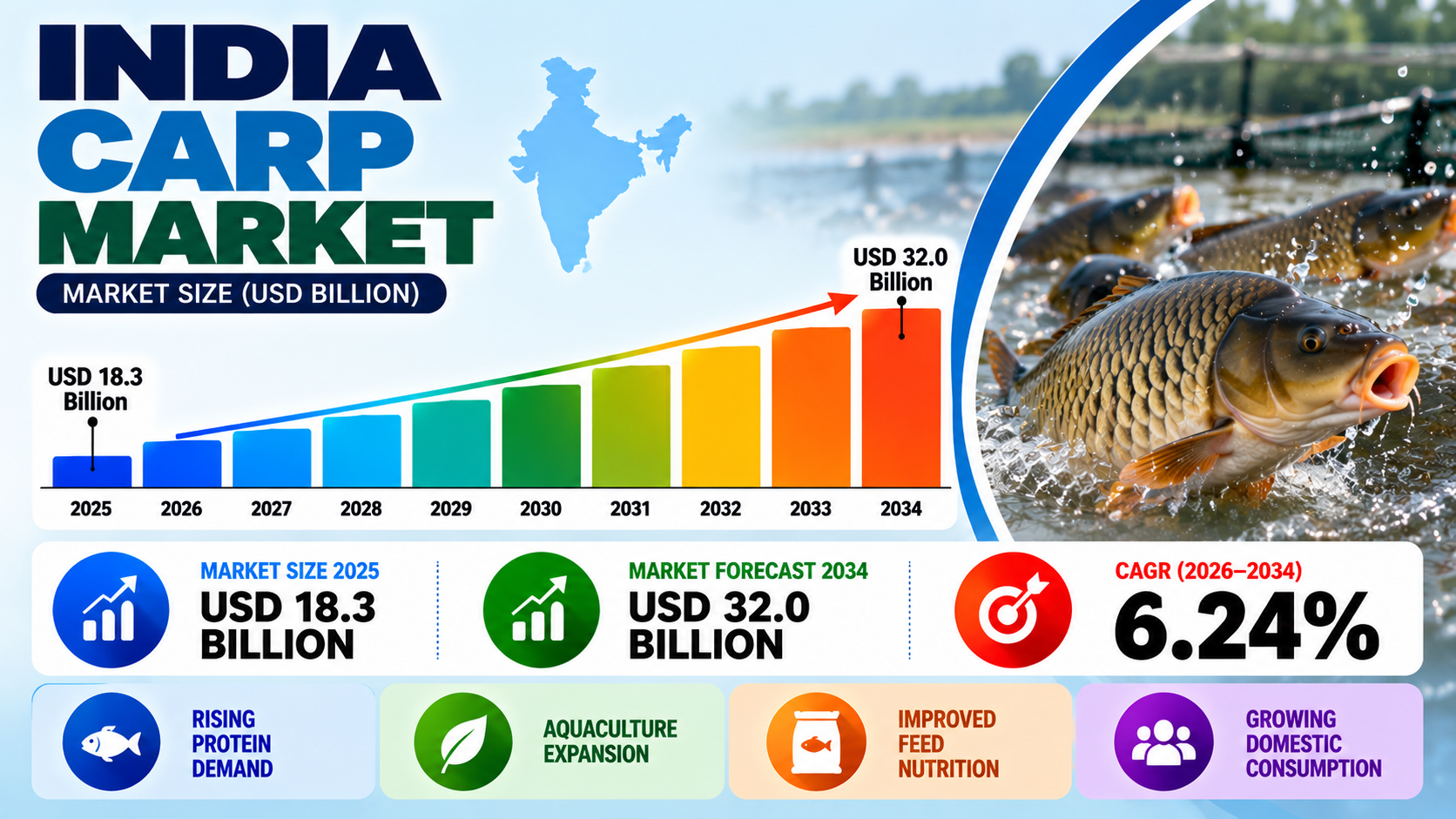
- Market Size (2025): USD 18.3 Billion
- Forecast Market Size (2034): USD 32.0 Billion
- CAGR (2026-2034): 6.24%
- Species Covered: Silver Carp, Grass Carp, Crucian Carp, Common Carp, Bighead Carp, Others
- Products Covered: Gutted and Headfish, Semi-Fillets, Fillets, Others
- Sources Covered: Wild Capture, Aquaculture
- Regions Covered: North India, South India, East India, West India
Why the India Carp Market Is Growing?
- Rising Domestic Consumption Driven by Changing Diets:
Fish was once a mainstay mainly in coastal and riverine states, but lifestyle and nutrition shifts have extended its popularity nationwide. Carp is cheap, nutritious, and easy to find, making it a sought-after protein substitute among middle- and lower-income households and an appealing alternative to red meat for the health-conscious.
- Climatic and Geographical Suitability:
India’s rivers, lakes, ponds, reservoirs, and irrigation canals provide ideal conditions for freshwater farming, and over 2.4 million hectares of fresh water remain underutilized for aquaculture. Water temperatures of 25°C to 30°C for most of the year suit species such as Rohu, Catla, and Mrigal, while rainfall and nutrient-rich water in eastern and southern states support plankton blooms that serve as natural carp food.
- Government Support for Aquaculture Infrastructure:
Policy backing for inland fisheries is expanding hatcheries, farming support, and market infrastructure, strengthening the carp supply chain across rural and urban areas.
- Technological Advancements in Fish Breeding:
Improved breeding and expanding hatchery infrastructure raise production efficiency and seed quality, helping farmers scale from extensive pond culture to semi-intensive and intensive systems.
- Private Sector Investment in Cold Chain and Retail:
Investment in cold chain logistics and organized retail is improving access to organized markets and exports, while supermarkets and online food platforms now carry cleaned and packaged carp.
Evaluate Market Opportunity with the Business Sample Report
What Are the Key Trends Shaping the India Carp Market?
- Packaged and Convenience-Led Fish Retail:
Supermarkets and online food delivery platforms are offering cleaned, packaged carp, matching the needs of urban, nuclear households that want quick-to-cook protein.
- Modern Fish Market Infrastructure:
In August 2024, the Chennai Metropolitan Development Authority announced a modern, two-story fish market complex in Kolathur, estimated at INR 53 crore over 4.5 acres, with 180 shops benefiting approximately 300 vendors.
- Stock Enhancement and Community Programs:
On World Fisheries Day in November 2024, Varanasi officials released 75,000 Indian major carp fingerlings into the Ganga River to replenish fish populations, support biodiversity, and provide economic benefits to local fishing communities.
- Value-Added Product Formats:
Beyond whole fish, products such as gutted and headfish, semi-fillets, and fillets are gaining relevance as buyers look for convenience and processed formats.
Government Support Driving Market Expansion
Pradhan Mantri Matsya Sampada Yojana (PMMSY):
- Flagship program for sustainable fisheries and aquaculture development
- Supports production, productivity, post-harvest infrastructure, and market linkages
- Encourages inland aquaculture, including freshwater carp farming
Fisheries and Aquaculture Infrastructure Development Fund (FIDF):
- Provides financing support for fisheries infrastructure such as hatcheries, cold chain, and market facilities
- Strengthens the base for organized and export-oriented carp supply
State and Local Initiatives:
- Fingerling stocking drives such as the Varanasi release on World Fisheries Day support natural fish populations and fishing livelihoods
- Municipal fish market projects such as the Kolathur complex improve hygiene and vendor facilities
Explore the Full Report with Charts, Table of Contents, and List of Figures
Segment Insights
The India carp market size is analyzed by species, product, source, distribution channel, and region.
Species Insights:
- Silver Carp
- Grass Carp
- Crucian Carp
- Common Carp
- Bighead Carp
- Others
The report provides a detailed breakup and analysis of the India carp market by species.
Product Insights:
- Gutted and Headfish
- Semi-Fillets
- Fillets
- Others
The report provides a detailed breakup and analysis of the India carp market by product.
Source Insights:
- Wild Capture
- Aquaculture
The report provides a detailed breakup and analysis of the India carp market by source.
Distribution Channel Insights:
- Hypermarkets and Supermarkets
- Fish Shops
- Open Markets
- Online Stores
- Others
The report provides a detailed breakup and analysis of the India carp market by distribution channel.
Regional Insights:
- North India
- South India
- East India
- West India
The report analyzes all major regional markets across India.
Competitive Landscape
The IMARC Group report provides a comprehensive analysis of the competitive landscape, including market structure, key player positioning, leading strategies for success, a competitive dashboard, and a company evaluation quadrant.
Detailed profiles of all major companies are also provided, helping stakeholders understand how hatcheries, farms, processors, and retailers compete across the carp value chain.
Key Opportunities for Businesses and Investors
High-Growth Areas:
- Value-added carp products such as fillets and semi-fillets for supermarkets and online stores
- Cold chain and processing infrastructure that improves shelf life and access to organized retail and exports
- Hatchery and fingerling supply to expand aquaculture output
- Online and organized retail channels for cleaned, packaged fish
Strategic Opportunities:
- Integrated models that connect hatcheries, farms, processing, and retail to improve quality and traceability
- Aquaculture expansion in underutilized freshwater resources, supported by suitable climate and water conditions
- Partnerships with municipal and state authorities on modern fish market infrastructure
Discuss Your Requirements With an Analyst and Get Your Customized Market Report
Frequently Asked Questions (FAQ)
- How big is the India carp market?
The market was valued at USD 18.3 Billion in 2025.
- What is the future outlook?
The market is projected to grow at a CAGR of 6.24% during 2026-2034, reaching USD 32.0 Billion by 2034.
- What are the key factors driving the market?
Strong aquaculture tradition, rising demand for affordable protein, supportive inland fisheries policies, favorable climate, expanding hatchery infrastructure, and growing consumption in rural and urban areas.
- Which species and products does the report cover?
Species include silver, grass, crucian, common, and bighead carp, and products include gutted and headfish, semi-fillets, and fillets.
- Which regions are covered?
North India, South India, East India, and West India.
Conclusion
The carp market size in India is positioned for sustained growth through 2034, underpinned by dietary shifts, strong natural conditions for freshwater farming, and policy support for aquaculture infrastructure. Packaged products, modern markets, and cold chain investment are lifting quality and widening reach.
Stakeholders that invest in hatcheries, processing, and organized distribution will be best placed to capture the opportunity as the market moves from USD 18.3 Billion in 2025 toward USD 32.0 Billion by 2034.
Source: IMARC Group